Vatapá
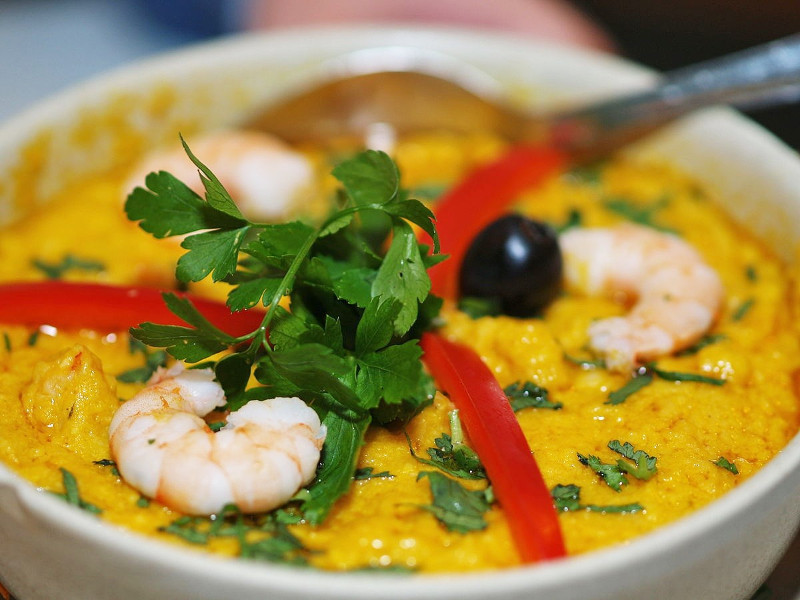
(Brazilian seafood stew with coconut milk)
Image by Wikipedia: Elingunnur
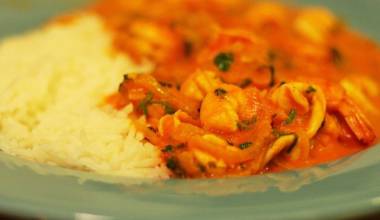
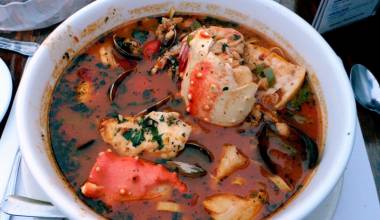
Vatapá is a scrumptious seafood stew and is one of the classic dishes of Brazilian cuisine. It hails from Bahia state on the northeast coast where many of the dishes have African origins. A thick version of vatapá is often served as a filling for acarajé patties.
4 to 6 servings
Ingredients
- Onion, chopped -- 2
- Dried shrimp (see notes) -- 1/2 cup
- Garlic, chopped -- 2 to 3 cloves
- Malagueta or jalapeño chile peppers, chopped -- 1 to 3
- Oil -- 3 tablespoons
- Stock or water -- 1 1/2 cups
- Natural peanut or cashew butter -- 1/2 cup
- Breadcrumbs -- 1 cup
- Salt and pepper -- to taste
- Shrimp, peeled and deveined -- 1 pound
- Coconut milk -- 2 cups
- Dendê, or red palm oil (optional) -- 1/4 cup
Method
- Place the onion, dried shrimp, garlic and chilies in a food processor or blender and puree well. Add a little water if necessary.
- Heat the oil in a large saucepan over medium heat. Add the onion-shrimp mixture and saute until cooked through, about 5 to 7 minutes.
- Stir in the stock or water and whisk in the peanut or cashew butter until smooth. Then stir in the breadcrumbs, salt and pepper. Bring to a boil, then reduce heat to medium-low and simmer for 5 to 8 minutes to meld the flavors.
- Stir in the shrimp and coconut milk and simmer another 5 or 6 minutes, or until shrimp is almost cooked through.
- Remove from heat, stir in the dendê oil and serve over rice or alongside acarajé bean fritters.
Vatapá Notes and Variations
- Vatapá de Galinha (Chicken vatapa): Substitute 1 1/2 pounds of cooked, shredded chicken for the shrimp.
- Vatapá de Peixe (Fish vatapa): Substitute 1 1/2 pounds of firm white-fleshed fish, cut into chunks, for the shrimp.
- If you can't find dried shrimp, you can puree about 1 cup of fresh raw shrimp in a blender and substitute it for the dried.
- A truly authentic dish would use dendê, or red palm oil, which gives the dish a bright yellow-orange tint. If you can't find red palm oil, try adding 1 1/2 teaspoons of turmeric to the onion-shrimp paste instead.
- Some recipes call for the addition of 1 tablespoon of fresh, minced ginger. Others for 1 to 2 cups of chopped tomatoes.
- The breadcrumbs act as a thickener for the vatapá. Some recipes use cornmeal instead. Others thicken it like a gravy with flour.