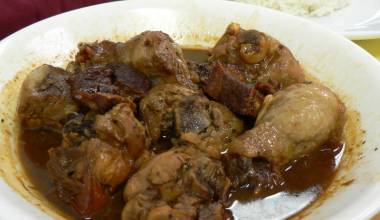
Poulet Fafa
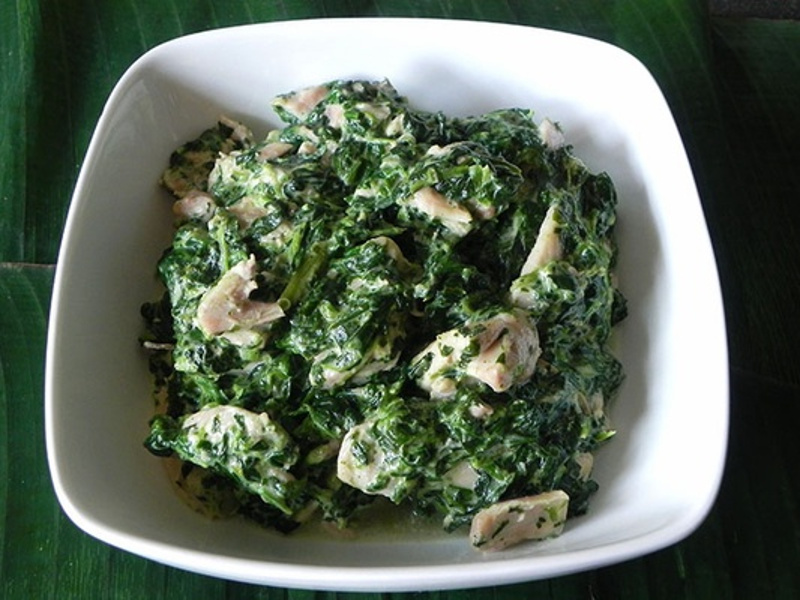
(Tahitian chicken with taro leaves)
Image by Wikipedia: Wildfeuer
Poulet fafa is a traditional part of a Tahitian ahima'a, or pit barbeque. If using taro leaves, make sure to follow the initial step to avoid a mouth on fire. The leaves must be cooked in saltwater first to remove irritating cacium oxalate from the leaves.
Taro leaves can be fairly difficult to find, so spinach is a perfectly respectable substitute. The Hawaiian version of the dish is called chicken luau.
Coconut cream is the thick coconut milk that rises to the top of a can of coconut milk. Avoid shaking the can before you open it and you can skim it right off the top.
4 to 6 servings
Ingredients
- Taro leaves (fafa), or spinach, chopped -- 1 1/2 pounds
- Oil -- 2 or 3 tablespoons
- Chicken thighs -- 1 1/2 pounds
- Onions, finely chopped -- 2
- Garlic, minced -- 2 or 4 cloves
- Ginger root, minced -- 1-inch piece
- Stock or water -- 1 1/2 cups
- Salt and pepper -- to taste
- Cornstarch or arrowroot -- 2 or 3 teaspoons
- Coconut cream (see notes) -- 1 cup
Method
- If using taro leaves, bring a large pot of salted water to a boil. Add the taro leaves, reduce heat and simmer for 30 to 40 minutes. Drain and squeeze dry. If using spinach, skip this step and proceed to Step 2.
- Heat the oil over medium-high flame in a large pot. Brown the chicken on all sides in the hot oil and remove to a plate.
- Saute the onion, garlic and ginger in the remaining oil until the onion is translucent. Add back the chicken pieces and the stock or water, salt and pepper. Reduce the heat to low and simmer, covered, for about 20 minutes.
- Add the taro leaves or spinach and simmer for another 15 minutes, or until the chicken is tender.
- Stir the cornstarch or arrowroot into 2 or 3 tablespoons of cold water and then stir the slurry into the simmering sauce to thicken it lightly. Stir in coconut cream to finish and serve over rice.
Poulet Fafa Variations
- If using frozen spinach, thaw first, then squeeze dry before adding to the simmering chicken.